
'Flush with funds, lending became a cash management exercise.' 'Road projects, power generation plants, airports etc were financed left and right with apparently no regard for the projects' ability to repay,' explains S Muralidharan, former managing director, BNP Paribas.

The recent tragedy confirms the view of humanitarian aid as a political weapon

On Tuesday, a judge in the US denied a request by Aakash Dalal's attorney to have his trial sent to another district and conducted under a different judge since the adverse publicity the case had gathered in the present court area in the Bergen county of New Jersey. Arthur J Pais reports.

The RSS on Sunday said it has not abandoned its commitment to build a grand Ram temple in Ayodhya and sought speeding up of the case proceedings in the Supreme Court.

'I'm a rascal, I'm going to play a paramahansa?!'

'Where will the next 200 million users that will come online in India prefer to go? Will they buy a data pack, or will they use the free Internet?' 'What will happen when most of the Internet in India is inside a walled garden?'

In a historic ruling, the US Supreme Court on Friday legalised same sex marriage, holding that gay people can get married in all 50 states of the country.

If you have the cash, the big fat Indian wedding just got bigger. (Psst! And the good folks at TripHobo.com have a few ideas!)

Mobile Internet, of course, helped Burhan Wani to spread his message. And some rumour-mongers at the inception of the current unrest spread falsehoods at least on two occasions, but why ban all mobile communication including cellular network and cable TV when deep-seated alienation among youth has shaped their ideology which is now playing out in the form of massive protests, asks Athar Parvaiz.

'Sakshi's medal will do to women's wrestling what Sushil's 2008 Olympic medal did to wrestling in general.' 'It will make more and more families put their daughters into wrestling.' 'More and more young girls will fall in love with the sport and demand that they be taken to akhadas.'

To persist with talks in the face of continuing terrorism that puts hundreds of Indian lives at stake is not only naive but morally repugnant and ethically unacceptable. It is time to see through this charade and abandon a path of high risk and no returns, says Vivek Gumaste.

Union Environment Minister Harsh Vardhan welcomed the apex court's order and urged people to abide by the SC guidelines and 'give green Diwali and our environment a chance'
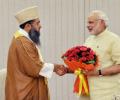
The least the leaders who met Prime Minister Narendra Modi could have done was to highlight the plight of the Muslim riot victims, but they happily chose to ignore it, so privileged they must have felt to be in the presence of the prime minister, the most powerful man in the country, says Syed Firdaus Ashraf.
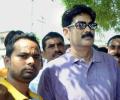
'At least 6,000 people attended a meal at Shahabuddin's residence in a feast to celebrate his bail. As if the community has no other priorities of channelising such funds for better purposes!,' says Mohammad Sajjad.

'Why does it exist in the film industry?' 'It is because we are culturally nepotistic.' 'The son always grows up to carry on the work of the father; that's where we come from.' 'So if you have to tackle nepotism in the film industry, you have to tackle it in our culture.'

Has New Delhi internalised the truth that it does not matter, asks Saeed Naqvi. Such deafening silence from the government, principal opposition, even the pundits!
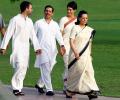
Indian law makes it clear that Sonia and Rahul are not related to Robert Vadra, nor is Sonia a relative of Pandit Nehru.
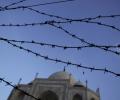
Everyone wants a piece of the Taj Mahal, but do they care about the deteriorating condition of India's best-loved monument

Bangladesh's fundamentalist Jamaat-e-Islami chief Motiur Rahman Nizami was on Wednesday sentenced to death by a special tribunal for his role in the killing of thousands of people during the nation's independence war against Pakistan in 1971.

A prominent lawmaker of the opposition Bangladesh National Party was on Tuesday sentenced to death by a special Bangladeshi tribunal for genocide during the country's 1971 liberation war against Pakistan, becoming the first Member of Parliament and seventh person to be convicted of crimes against humanity.
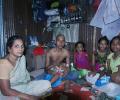
Families, torn apart by the Malvani hooch tragedy, where 104 people lost their lives confront a dark and hopeless future.
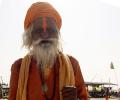
'While India's 'secularism' is a matter of cultural values rooted in Hinduism, the Western concept became one of rights rooted in legal rights. India would be secular with or without Article 25 of the Constitution,' says T V R Shenoy.

Lawyer and scholar Vinay Sitapati says the 'Get Modi' strategy largely misses the efforts to prosecute people evidently guilty of violence and murders in the Gujarat riots in favour of "a narrow quest to stop one man from becoming prime minister."

After many false starts, India may well be at the inflexion point that Deng Xiaoping took China to post-1978. The window of opportunity is wide open right now, says Rajeev Srinivasan.
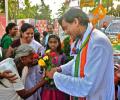
'I do not require validation from a hostile media. My conscience is clear.'

20 times increase in people joining RSS on rss.org, Marginal increase in number of branches. Archis Mohan reports

Why has a nation created on strong secular principles slowly chipped away those essential values? Why are so many Indians willing to compromise their freedoms and those of their compatriots for the cause of economic progress and to see a shining India,' asks Aseem Chhabra.

'Criticism that Amnesty is interested in those in favour of independence for Kashmir is unfounded.'

Bestselling author Dan Brown spoke at the Penguin Annual Lecture in Mumbai on November 12. Snapshots from the evening

Uncertainty lingers in the minds of retail investors due to scams.


The issue of lynchings resonated in the Rajya Sabha; while in the Lok Sabha, the Opposition accused the government of not being sensitive towards farmers' issues.
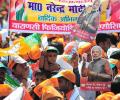
'My feeling is that these parties will not learn their lesson despite their electoral drubbing. They cannot put forward a leader. They have no record of improving their constituents' lives by providing basic services. All they offer is their "'secularism",' says T V R Shenoy.

Bhim denotes Dalit icon Bhimrao Ambedkar, while Mim denotes the letter 'M' in the Urdu alphabet; the party used the slogan effectively in the 2014 Maharashtra assembly elections

Industrialist Naveen Jindal, fighting to win the Kurukshetra Lok Sabha seat for a third time, has more than just Narendra Modi to contend with. Joel Rai reports.

Prime Minister Narendra Modi's success at courting Indians abroad have been as much a result of his old contacts as efforts by a dedicated arm of the BJP abroad. Archis Mohan reports

In conversation with Karan Thapar, former Vice President Hamid Ansari takes on one of the most sensitive issues of our times.
If this election is about Narendra Modi, then it is also about the RSS, notes Mihir S Sharma.
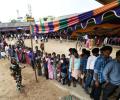
Barring one of the earliest surveys of the kind in the country, in 1989, none has proved right in Tamil Nadu's case, says N Sathiya Moorthy.

'Only he can bring change in India that all of us have been dreaming of since we saw America for the first time when our plane touched down at JFK airport.' Narendra Modi's friends in New York and New Jersey travel down memory lane and remember a simple man with great ambition. Sheela Bhatt/Rediff.com tracks down the Modi bhakts, who knew since his first visit in 1993 that he was destined for bigger things.
 © 2026 Rediff.com - Advertise with us - Disclaimer - Privacy Policy - Sitemap - Feedback - About us - Terms of use - Grievances